Food Quality Control and Microbiology
Sector Challenges
In Food Quality Control and Microbiology, quality is defined by rapid moisture determination, shelf-life testing, microbiological incubation, sterile work area, homogenization and sample prep. Small deviations at these points can shift reported values and business decisions.
Field conditions increase risks such as microbial contamination, incorrect moisture results, temperature drift, sample degradation. Compliance with ISO 4833, ISO 7218, AOAC and repeatable process control is therefore essential.
YekGlobal Technology and Solutions
YekGlobal systems support moisture analysis, incubation, sterile plating, sample homogenization with stable temperature control, reliable airflow management, and consistent measurement infrastructure.
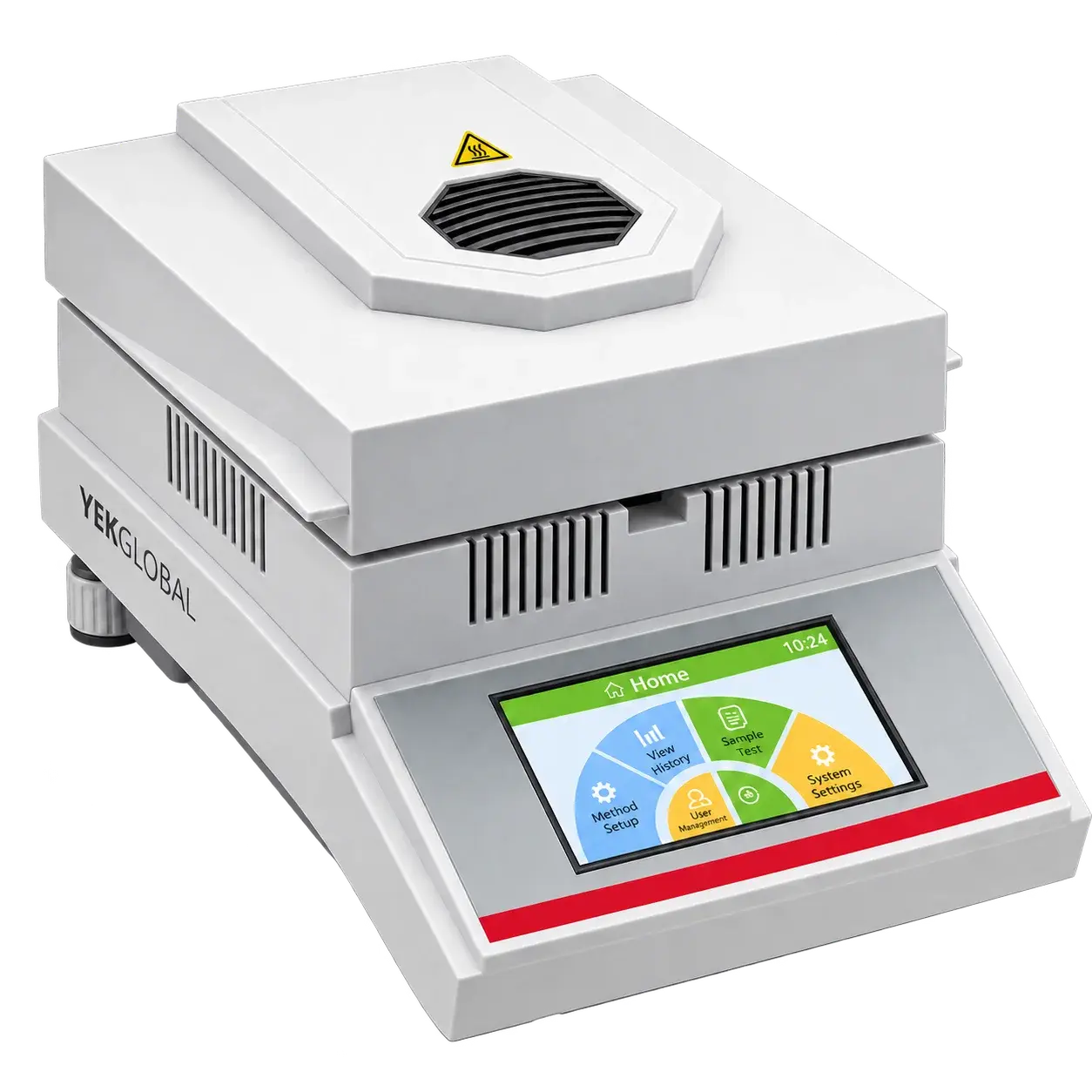
Rapid moisture determination delivers a percent profile in minutes, accelerating shelf-life decisions. Laminar flow cabinets with HEPA H14 filtration reduce contamination risk during sterile plating.
Critical Features
- Precision moisture sensor with automatic shutoff
- Stable 37°C incubation with low fluctuation
- H14 HEPA filtration for sterile work
- Adjustable speed and blade set for homogenization
- Timer control and user profiles
We combine layout planning, validation support, and operator training to sustain performance over the full lifecycle.
Recommended products for this sector include: Nem Tayin Cihazı, Bakteriyoloji İnkübatörü, Çalkalamalı İnkübatör, Dikey Laminar Flow Kabini, Homojenizatör.
Standardized sample preparation across moisture analysis, incubation, sterile plating, sample homogenization reduces uncertainty and improves inter-lab comparability.
Uniformity mapping ensures each shelf experiences the same conditions, limiting drift between runs.
Data logging and traceable reporting support audits and align with ISO 4833, ISO 7218, AOAC expectations.
Multi-layer insulation and sealed doors improve energy efficiency and temperature stability.
High-extraction ventilation and chemical-resistant surfaces strengthen operator safety in routine workflows.
A defined calibration schedule protects measurement integrity under intensive use.
Standardized sample preparation across moisture analysis, incubation, sterile plating, sample homogenization reduces uncertainty and improves inter-lab comparability.
Uniformity mapping ensures each shelf experiences the same conditions, limiting drift between runs.
Data logging and traceable reporting support audits and align with ISO 4833, ISO 7218, AOAC expectations.
Multi-layer insulation and sealed doors improve energy efficiency and temperature stability.
High-extraction ventilation and chemical-resistant surfaces strengthen operator safety in routine workflows.
A defined calibration schedule protects measurement integrity under intensive use.
Standardized sample preparation across moisture analysis, incubation, sterile plating, sample homogenization reduces uncertainty and improves inter-lab comparability.
Uniformity mapping ensures each shelf experiences the same conditions, limiting drift between runs.
Data logging and traceable reporting support audits and align with ISO 4833, ISO 7218, AOAC expectations.
Multi-layer insulation and sealed doors improve energy efficiency and temperature stability.
High-extraction ventilation and chemical-resistant surfaces strengthen operator safety in routine workflows.
A defined calibration schedule protects measurement integrity under intensive use.
Get a Quote and let us configure the right setup for Food Quality Control and Microbiology.